I tell new hosts not to throw a dinner party, and a Friendsgiving is a dinner party.
So let me be straight about that first. Then I'll show you how to host a good one anyway, because I understand the pull. It's a fun excuse to get your friends around one table.
Should you host a Friendsgiving?
Yes, if you know what you're signing up for. A Friendsgiving is a seated meal for a group of friends, usually the weekend before or after Thanksgiving. It works best when you plan the people and the timing as carefully as the food.
Here's why I usually steer people away from dinners. They're logistically complicated for new hosts. You have food, timing, and dietary restrictions. And people tend to focus too much on the food. I think the food should be your last concern. The relationships and the conversations are the point.
Dinners are also fragile. When I hosted dinners, one or two cancellations ruined the whole vibe. A cocktail party has more room for that. A dinner table doesn't.
And a dinner asks for a lot of time. It assumes about three hours, which makes it harder for busy people to say yes. If you want the easier version, I wrote up why I'd rather you host a cocktail party instead.
But I also tell people you can graduate to a dinner party. If you've hosted a few smaller gatherings, or you just really want the turkey and the table, go for it. Here's how I'd do it.
Pick the date three weeks out
Host your Friendsgiving on a weekend, not on Thanksgiving Day itself. Most of your friends have family plans on the day. The weekend before gives you the biggest turnout, and the weekend after works too.
In 2026, Thanksgiving is Thursday, November 26. That makes Saturday, November 14 and Saturday, November 21 your best bets.
I recommend planning about three weeks ahead. Three weeks is when you start testing the waters and choosing your dates. I once blasted out invites on a Tuesday for that Thursday and two people showed up. Don't do that.
Here's what to do at the three-week mark. Text your core group and ask: "Hey, I'm thinking about hosting a Friendsgiving on this night at this time. If I did, would you come?" When they say yes, tell them you'll send the details next week. Then you build the RSVP page.
Build the guest list
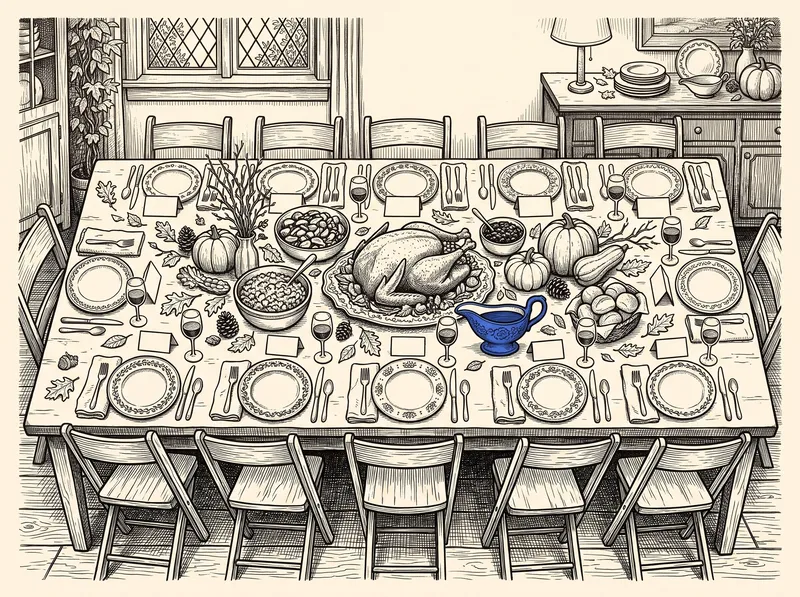
Aim for a number your table can actually seat, and mix your friend groups. The size of the table changes how people talk, so decide how big it is before you invite anyone.
Priya Parker, who wrote The Art of Gathering, says that once you have eight or more people at a dinner table, the conversation splits into several side conversations. At a cocktail party, that's exactly what I want. At a dinner, you'd rather keep one conversation going. So for a small Friendsgiving of four to six, you get one big table conversation. For a bigger group, expect it to split, and plan for it. Put people who haven't met next to each other and let the table do its thing.
I also want you to invite people from different buckets of your life. You may have your coworkers, your neighbors, your rock climbing friends. Invite people from each of those groups. I hear from so many hosts, "I can't believe those two got along." I promise you, you are the common thread.
If your place is too small for a table of that size, check my list of places to have a party before you cram twelve people into a studio.
Pro tip: Dinners break easily when people cancel, so confirm your headcount twice. Once when they RSVP, and once in your reminder messages.
Send invites and collect RSVPs
Invite people one at a time, then collect RSVPs on a single page. A mass text to the group chat gets ignored. A personal message gets an answer.
I use Mixily for this. It makes an event page your friends can RSVP to, and it sends updates to your guests. Whatever tool you pick, the RSVP page works like a little social contract. When people click yes, they feel committed. I wrote a full guide on how to collect RSVPs.
Put these on the page:
- The date, the start time, and the end time
- The address and where to park
- What you're cooking and what you need people to bring
- A line asking about dietary restrictions
Ask about dietary restrictions now. Finding out about a vegan and two gluten-free guests at 4pm on the day is no fun.
Decide: potluck or no potluck
Cook the main dish yourself and assign the rest. A Friendsgiving is a meal for a dozen people, so I think this is the one time asking guests to bring a dish makes sense.
That's different from how I run my own cocktail parties. There I ask for nothing, because I want it to be as easy as possible for somebody to stop by. When someone asks what they can bring, I say absolutely nothing is required, but if they want, a bottle or a can of something they'd drink. I love a potluck as much as anyone. But for a quick drinks-and-snacks party, the obligation can scare people away.
A Friendsgiving doesn't have that problem. Your guests already expect to bring something. So make it easy:
- You make the turkey (or the main) and set the drinks.
- Assign by category: a side, a dessert, bread, a salad, wine.
- Write the list on your RSVP page so people don't show up with four pies.
- Give guests with no kitchen an easy job, like ice, drinks or napkins.
For more dish ideas, see my guide to hosting Thanksgiving. And if a guest asks what else to grab, send them to what to bring to every type of party.
Send three reminders
Send three reminder messages: one week out, three or four days out, and the morning of. Reminders are how you get people to show up. In hundreds of parties I've hosted, I've never had somebody say I was spamming them. I consistently get over a 90% attendance rate from the people who say they're coming.
Here's what I put in each one:
- One week before: The date and time again, and the plan.
- Three days before: Who's coming, so guests get excited to meet each other, plus a rough agenda.
- The morning of: The logistics. Address, parking, and when dinner gets served.
Here's a sample for the morning-of message you can copy:
Friendsgiving is tonight! Doors open at 5 and we'll eat around 6:30. Parking is on the street, and my buzzer is 4B. Still need one more person to grab ice. Can't wait to see you all.
I have three reminder messages you can copy and paste if you want the full set.
Grab the free 2-page party checklist.
Run the day like a short cocktail party first
Start with drinks and standing around, then sit down for dinner. Sitting down is the kryptonite to a good mixer. When you eat, you sit next to the person you're already talking to, and you get locked in.
So don't seat everyone the minute they arrive. Open the door at 5, let people mingle with a drink and a snack for the first hour, and call everyone to the table later. That hour is when the name tags and the gratitude round happen. It also buys you time to finish cooking.
This part is my own suggestion, not something I've tested at a Thanksgiving table. But the logic is the same as any party I host.
Tell your guests the schedule on the invite. A three-hour block is a lot, and people appreciate knowing when it ends.
Use name tags when your friend groups mix
Use name tags if your guests come from different circles. Skip them if everybody already knows each other. I don't use name tags at a family reunion, or for a regular Thursday night group of the same seven friends.
But when you invite people from different buckets, a name tag works like a sports jersey. It's a visual unifier that tells people this isn't a party of cliques. It also gives the plus-one a way in. I don't want my nerdy friends talking about AI in one corner and my neighborhood friends talking about parenting in another.
Two small rules. Write first names only, in big block letters. And write them yourself as the host as people arrive.
Tell people in advance. Put a line on the invite like: "I'm using name tags because I've invited people from different groups, and I'd like you to say hi to somebody new." When guests know the reason, they go along with it. My full write-up is on party name tags.
Do a gratitude round
Do a round where everyone says their name and one thing they're grateful for. A Friendsgiving already has a built-in reason to go around the room, so use it.
I call these rounds of intros instead of icebreakers, because the word icebreaker gets a knee jerk negative reaction these days. They do three jobs. They create new conversations, they help people end the ones they're stuck in, and they give the room a roll call. Everybody hears who's there.
The trick is to make the question easy. I avoid anything definitive and subjective, like "what's your favorite book," because people freeze while they search for an impressive answer. I say "one of your favorite books" instead.
The same fix works here. "What's the thing you're most grateful for?" is a brain teaser. Ask for "one thing you're grateful for this year" and anyone can answer. Add "and how you know me" for the guests who are meeting everyone for the first time.
Run it while people are standing with drinks, or once everyone sits down. More ways to do this are in my guide to icebreakers for adults, and you'll find gratitude activities on the Thanksgiving page.
End it on a high note
Announce the end 15 minutes ahead, then thank everyone. You want to pop the balloon while things are going well, not let it fizzle out while people slowly trickle out the door.
Dinner guests get sleepy and nobody wants to be the first to leave. So give them permission. Here's the kind of wording I suggest:
Hey everybody, it's 9:00, party's scheduled to end now. I'm happy to host if you want to hang out, but I also know a lot of y'all have to go back, you have work tomorrow, you have kids, you have a babysitter. Thank you so much for coming. We'll stay here, happy to host you if you want to have a nightcap, hang out.
That works well for friends. Whoever wants to leave has an easy exit, and whoever wants to stay can help you with the dishes.
FAQ
How far in advance should I plan a Friendsgiving?
Three weeks. Use week one to ask your core group if they'd come, week two to send the invite with an RSVP page, and week three for reminders. For a Friendsgiving on November 21, 2026, start by October 31.
What day should I host a Friendsgiving?
Pick a weekend. The Saturday before Thanksgiving is the safest, since most people travel or have family plans on the day itself. For 2026, that's November 14 or November 21.
How many people should I invite?
Choose the number your table can seat, then decide how you feel about side conversations. I'd say four to six for one shared conversation. Eight or more splits into smaller groups, which is fine if you plan for it. Dinners break when people cancel, so confirm your headcount before the day.
Should guests bring food to a Friendsgiving?
Yes. This is the one case where I'd ask. Cook the main yourself and assign categories like sides, dessert and drinks on your RSVP page. For other kinds of parties I ask for nothing. See what to bring to every type of party for the guest's side of this.
Do I need name tags at a Friendsgiving?
Only if your guests come from different friend groups. If everyone already knows each other, skip them. If you're mixing circles, use first names only and tell guests ahead of time why you're doing it.
One thing to do this week
Pick your date and text five people: "If I hosted a Friendsgiving on this night, would you come?" That's the whole first step.
Then build your RSVP page and send the invites. Good luck. This will be fun.