
I've hosted hundreds of happy hours and cocktail parties, and I run an icebreaker at every single one. The question matters less than you think. What matters is the activity you pick, when you run it, and whether you go first.
This guide is for parties where guests don't already know each other. It's the "I" in my NICK method: name tags, icebreakers, cocktails only, kick everyone out at a set time. If you want a full bank of conversation questions sorted by how personal they get, I have that on my conversation topics guide. This page is about the games and formats you actually run at the party.
Warning: This format is for mixed groups, the kind where half the room doesn't know the other half. Skip it at a family reunion or a two-year-old's birthday party where every parent already knows every other parent. Save it for a happy hour, a meetup, or any networking event where guests are strangers to each other. If you're inviting a group like that, track RSVPs with Mixily so you know who's actually walking in the door.
The Icebreaker That Works Almost Every Time
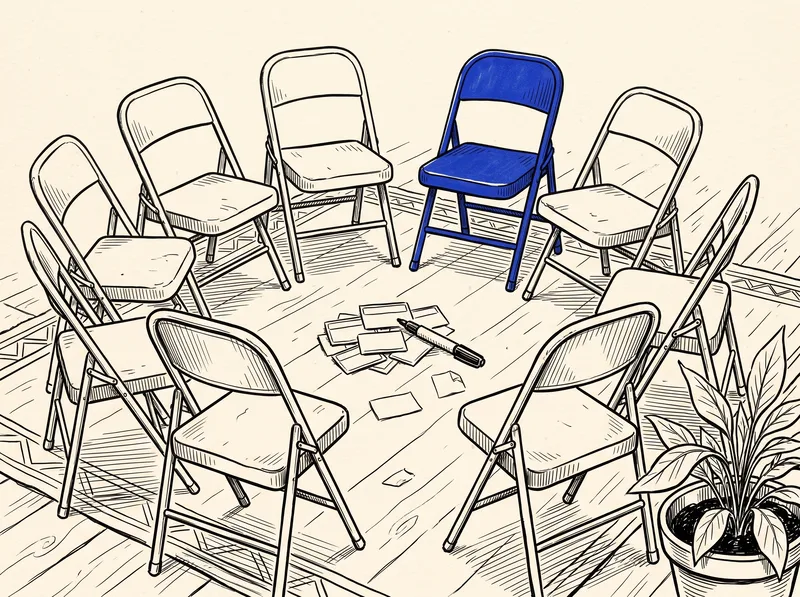
Here's the format. Ask your guests to gather in a circle. Everyone says three things: their name, what they do for work (or a hobby, if they'd rather skip work talk), and one more small answer.
My go-to third question is: what's your favorite thing to eat for breakfast?
Good icebreakers work like a short survey of the party, and everyone gets to see the results live. Each guest broadcasts who they are, and you get to "meet" everyone in the room in a few fast minutes.
A good icebreaker is a fast icebreaker, not a brain teaser. That's why I never open with something like "what's your favorite book?" That question invites judgment. People freeze up trying to sound smart. Breakfast doesn't do that. Everyone has an answer, and it's revealing without asking anyone to be vulnerable. Someone who says "steel-cut oats" is a different person than someone who says "leftover pizza," and now you have something to talk about. Somebody who swears by pancakes and bacon might be exactly the person to ask for restaurant recommendations later.
I've used this same opener hundreds of times. I don't try to invent a new one for every party. Guests who've heard it before understand why I'm doing it again, and new guests get a great first experience either way. Consistency isn't boring here. It's reliable.
Pro tip: Don't hunt for a clever new question every time. Pick one that works and reuse it. The facilitation matters more than the novelty.
When to Run Each One
For a two-hour party, I run three icebreakers on a set schedule:
- 10 minutes in. Do it with whoever's arrived so far, even if that's only four or five people. Those first ten to twenty minutes are what I call the Awkward Zone: only a few guests are there, momentum hasn't built yet, and it can feel like everyone's waiting for something. An icebreaker is the fastest way out of it.
- 40 minutes in. Repeat the exact same question, now with the full room. Early arrivals won't mind answering again. They'll understand you're doing it again because more people showed up.
- 80 minutes in, right after the group photo. This is your advanced icebreaker, and it's a different kind of question. More on that below.
Running the first one early isn't really about the guests. It's about you. New hosts are often terrified to interrupt a party that's "going well" to run an icebreaker. Doing it early, with a small group, proves to you that it works before you have to do it again in front of everyone. If you've ever told yourself you skipped an icebreaker because "everyone was having fun," what you were actually saying was that you got nervous.
This tight schedule is also why I keep the whole event to two hours. If you want more on why that length works, I break it down in my party length guide.
How to Actually Lead One
When four or five guests have arrived, grab your harmonica. I carry one to every event as a crowd-control device, and if I leave any legacy at all, it might be popularizing the harmonica as a hosting tool. Turn down the music, blow one long, low note for three or four seconds, and say something like:
OK, everybody listen up. What a great group of friends! Let's come over here to circle up and stand together. You all showed up early or right on time. Thank you for that. You're great.
Get everyone into a circle. Then introduce the question:
I want us to go around the circle and do a quick icebreaker so we can get a survey of who's here. Say your name, what you do for work, and one of your favorite things to eat for breakfast. If you don't want to talk about work, say something you're passionate about instead, like a hobby or a charity.
Before you start, look to the person on your left or right and ask, "I'll go first, and then can I go to you?" Once they agree, say it again out loud for the group: "I'll go first, and then I'll go to you, and we'll go around the circle in that same direction." Spelling out the direction the circle will move sounds like a small thing, but it lowers anxiety for the more introverted guests in the room. They know exactly when their turn is coming, so they can stop rehearsing their answer and actually listen to everyone else's.
Now answer your own question. Here's mine:
My name is Nick Gray. I'm the founder of Museum Hack, a company that does renegade museum tours in New York City and at some of the best museums in America. My favorite thing to eat for breakfast is scrambled eggs with spinach, but I have a secret ingredient. I use coconut oil.
That answer takes about 25 seconds. Short, but not too short. Yours should land under 30 seconds too, since guests copy your example more than they follow your instructions.
If someone runs long, sound your harmonica again and give them ten seconds to land the plane. It sounds harsh on paper. In practice it gets a laugh, and it keeps the energy up for everyone still waiting their turn.
Pro tip: Go first, every time. Keep your own answer specific and under 30 seconds. A good example does more work than a good set of instructions.
The Second and Third Icebreakers
Your second icebreaker, at the 40-minute mark, repeats the exact same breakfast question, just with everyone now in the room. Don't overthink it. Same question, bigger circle.
Your third icebreaker, after the group photo around 80 minutes in, should be a different kind of question entirely. I call it the advanced icebreaker. Instead of asking people to share about themselves, ask something that gives the whole room a useful answer:
What's the best piece of media you've consumed recently? A podcast, a movie, a show you binge-watched.
Everybody walks away with a new recommendation, and the room feels like a gathering of smart, generous people. That's the whole trick to a good advanced question: it's genuinely curious and it's a little unexpected, so answering it makes the guest feel sharp instead of exposed. A couple other versions that work the same way:
- What's the best purchase you've made for under $100?
- What's a local restaurant more people should know about?
By 80 minutes in, the room has warmed up enough to handle a question with a little more thought behind it. Don't start here. Start with breakfast.
How I Run Icebreakers Now: Small Groups, Not One Big Circle
My book taught one format: everybody in a single circle, going around one at a time. That's still the right call for a first-time host, because breaking a room into small groups is genuinely harder to control. The first time you release people into groups of three, you lose the room, and getting everyone's attention back ten separate times is real work.
But small groups are more engaging once you can pull it off. People get to talk more, and some guests who don't love speaking in front of a whole circle are still fine talking in front of two other people. That's the trade-off: harder for the host to manage, easier for a shy guest to enjoy.
But my own events have moved past that. Now I do a lot more small groups of three, four, or five people, right at the start, before I ever call for one big circle. One module I run: I'll gather people into groups of three and ask them to tell their life story in two minutes. Two minutes is a long time, and it produces a handful of close connections fast.
To form the groups, I hand out name tags in six different colors and ask people to find everyone wearing their color. It also means guests get a name tag with a prompt on it, which does double duty as its own conversation starter. If you want to build a set like that, I've got the exact colors and prompts in my icebreaker name tags guide.
After the small groups, I'll still bring everyone into one or two whole-group circles later in the party. The book format works, and I've had over 500 people tell me they hosted their very first gathering using it. Small groups are just a layer on top of that, not a replacement for it.
Speed Icebreakers: The Advanced Version
If you want to push further than small groups, there's a format I call Speed Icebreakers. Split the whole room into two lines facing each other. Give everyone one minute to answer a question with the person across from them, then have one line step down so everyone's facing someone new. Run about ten questions this way.
It's intense to run. Everyone explodes into conversation the second you release them, and getting quiet back ten separate times takes real effort from the host. I left it out of my book because it's too advanced for a first-time host, but if you've run a few parties already, it's one of the more memorable things you can do. I cover the full script in my speed icebreakers guide.
Grab the free 2-page party checklist.
Keeping the Room Moving
Icebreakers aren't the only tool for shuffling a room. A few advanced moves I use throughout the party:
- Give new arrivals a small job. I'll put someone in charge of the bar, someone in charge of coat check, occasionally someone in charge of high fives. It gives them a place to go the second they walk in instead of standing around.
- Break up a bottleneck. If a crowd piles up near the kitchen or the bar, I'll physically walk over and say, "Hey, would you two come stand over here with me for a second?" That's an advanced move, and it works.
- Write "who to meet" cards. For half the guest list, I'll write a card naming one or two other people they'd probably like to meet. It's real prep work, so I don't do it for everyone, but people feel seen by it.
- Hire a surprise. At one of my meetups for people with huge social media followings, I hired a hip-hop improv troupe that freestyle-rapped about people they'd just met at the party. It absolutely crushed the room, and it blew everybody's mind. This one's genuinely advanced, and it can intimidate a new host, so don't start here either.
Get Ahead of It Before the Party Starts
You can also do some of this work before anyone shows up. Send your attendee list a few Instagram or Twitter handles ahead of time, so people arrive with a sense of who else is coming. Then, once the group has actually formed, run a quick roll call before people scatter to mingle one-on-one. It only takes a minute, and it means guests already know who does what before they start deciding who to approach.
How Icebreakers Shuffle the Room
Icebreakers have a hidden feature. They break up conversations.
You've probably been stuck at a party talking to someone you weren't enjoying, but it felt too rude to walk away. Icebreakers solve that from the host's side too. They give everyone, including you, a built-in reason to move on and go talk to someone new.
The first time I stopped a party to run an icebreaker, I was nervous about it. Things were going well. Everyone was talking. Why would I want to interrupt that? I tested the theory anyway. After sounding my harmonica, I walked up to a guest I didn't know well, who was mid-conversation, and invited him into the circle. There was a real chance he'd brush me off.
He didn't. He joined right in, and it went great. It reminded me that my job as a host is to shuffle the room, not protect any one conversation. If two guests want to keep talking later, they will. Your loyalty as a host is to the whole party, not to a single guest. Be confident when you call for an icebreaker, and expect everyone to join.
When Guests Push Back
Some people roll their eyes the moment they hear "icebreaker." They'll tell you they haven't done one since fourth grade. I hear this constantly, and after hosting hundreds of parties, I can tell you the simple version still works nearly every time.
The fix isn't arguing them into it. It's owning the awkwardness yourself instead of leaving it on your guests. Announce what's happening, admit it's a little silly, and give the reason:
I've met so many amazing people here. The reason I'm hosting this is to introduce you all. We're going to do something that seems like it's from fifth grade, but the purpose is so you'll have an excuse to go say hi to somebody new.
Say it with energy, go first, and keep moving. You don't need buy-in in advance. You just need sixty seconds of participation.
If someone still won't play along, don't make it a standoff. Let them pass, keep the circle moving, and check in with them one-on-one later. A single holdout doesn't derail the icebreaker for anyone else in the room.
Icebreakers for Small Dinner Parties
Everything above assumes a standing cocktail party of 15 to 20 people. A seated dinner of 6 to 10 works differently.
You don't need to circle people up. Everyone's already seated, so you just call for attention and ask the question. One icebreaker is usually enough since a table that size can already see and hear everyone. You can go a little warmer with the question too. Something like "what are you looking forward to this year?" fits a dinner table better than it would a room full of strangers standing with drinks.
You still have to go first, and you should still keep your own answer brief. If you wait for someone else to start, the table sits in a silence that makes the whole night feel like homework instead of a party.
If it's a group that already knows each other well, skip the breakfast question entirely and start with something warmer, like "what's a skill you wish you had?" A structured round like that resets the room even for old friends, and it signals that this dinner is going to be more than just eating.
Icebreaker Card Decks Worth Having
If you'd rather not write your own questions, a card deck does the job. These are worth adding to your party supplies list if you host regularly.
BestSelf's Original Icebreaker Deck ($24.99) has 150 cards across six categories: Life, Random, Deep, Experience, If You Could, and Would You Rather. The range lets you pick a card that matches the tone of your crowd instead of being locked into one register. It's the deck I reach for most, because I can pull something light for a first-time group and something deeper once the room's already warm.
TableTopics Cocktails Edition ($25) has 135 questions built for social gatherings. They skew lighter and more fun, which fits a cocktail party where you want the energy to stay up rather than dip into something heavier partway through the night.
We're Not Really Strangers ($25) is built for two players but also works at small dinner parties. It has three tiers of 150 questions that deepen gradually, moving from easy to genuinely personal. I wouldn't bring it to a cocktail party of 20, but for a dinner of 4 to 6 it's a solid pick for later in the night, once people already have some trust built up.
None of these are essential. But at $25, they're a cheap way to add variety if you host often. I reach for the BestSelf deck most.
Frequently Asked Questions
How many icebreakers should I do at a party?
Three, for a two-hour cocktail party: the breakfast question with your first few arrivals at 10 minutes, the same question again with the full room at 40 minutes, and an advanced question around 80 minutes. For a dinner party of 6 to 10, one at the start is enough.
What if people refuse to participate?
This rarely happens if you frame it as low-stakes and go first yourself. If someone pushes back, keep your energy light and keep moving around the circle. Once they see how fast and easy it is, most people join in without needing to be convinced first.
Do I need a different question every time I host?
No. I've used the breakfast question hundreds of times and I still use it. Repeat guests understand why you're doing it again, and new guests get a great first experience. The facilitation matters more than the question.
What's the best icebreaker for a group that already knows each other?
Skip the breakfast question and go straight to something with a little more depth, like "what's a skill you wish you had?" It reveals something new about people who think they already know each other. An advanced, value-additive question works here too, since it doesn't depend on the group being strangers.
Should I run icebreakers in small groups or one big circle?
Both, at different points. Small groups of three to five right at the start let people go deeper with fewer strangers watching. Bring everyone into one or two whole-group circles later, especially for your first icebreaker if you're new to hosting. Whole-group only is still the safer starting format if you've never run one before.
Are these different at a work event instead of a party?
The core mechanics are the same: go first, keep it fast, don't ask for vulnerability early. But a work event has its own constraints around what feels appropriate to ask, so I keep that as its own guide. Check out icebreaker questions for work if that's the room you're hosting.
Grab your harmonica, pick the breakfast question, and run it at your next party. You'll survive the awkward zone faster than you think. For the full two-hour format this all sits inside, check out my book, The 2-Hour Cocktail Party.